Fundamentals
Why an index makes reads faster
A smaller map can save a lot of searching. But that map has a cost of its own.
Ben Osborn
An index gives the database another way to find a row. Instead of checking every row in a table, it can look up a value in a separate structure and follow a reference to the matching data.
Think of the index at the back of a book: look up the term, then turn to the page. The database version has the same useful idea, though the details depend on the index type.
A small example
Imagine a table of customers. You often look up one customer by email:
SELECT * FROM customers
WHERE email = 'alex@example.com';
Without a suitable index, the database may scan the table. With an index on email, it has a more direct route to matching rows.
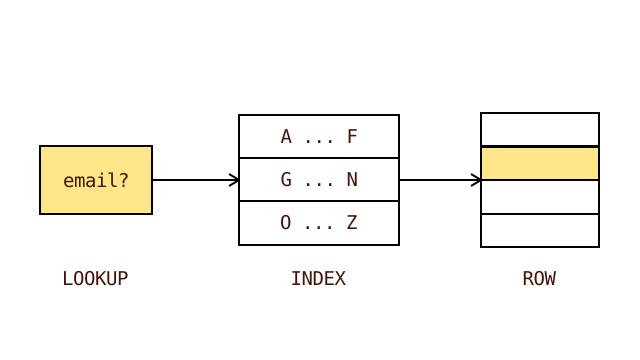
CREATE INDEX customers_email_idx
ON customers (email);
The work does not disappear
The index takes storage. Inserts, deletes, and relevant updates also need to maintain it. You are trading extra work on writes for a potentially cheaper path on reads.
An index is not always the fastest route. If a query needs much of the table, scanning it can be cheaper than following many index references. The query planner chooses based on its cost estimates.
An index is an extra route to the data. Whether that route is faster depends on how much data you need.
What to test
- Compare the query plan with and without the index in a test database.
- Use a realistic number of rows and a realistic spread of values.
- Measure write performance too. Faster reads are only part of the tradeoff.
Read more in the PostgreSQL introduction to indexes.